

Memphis, Tennessee, December 19, 2025
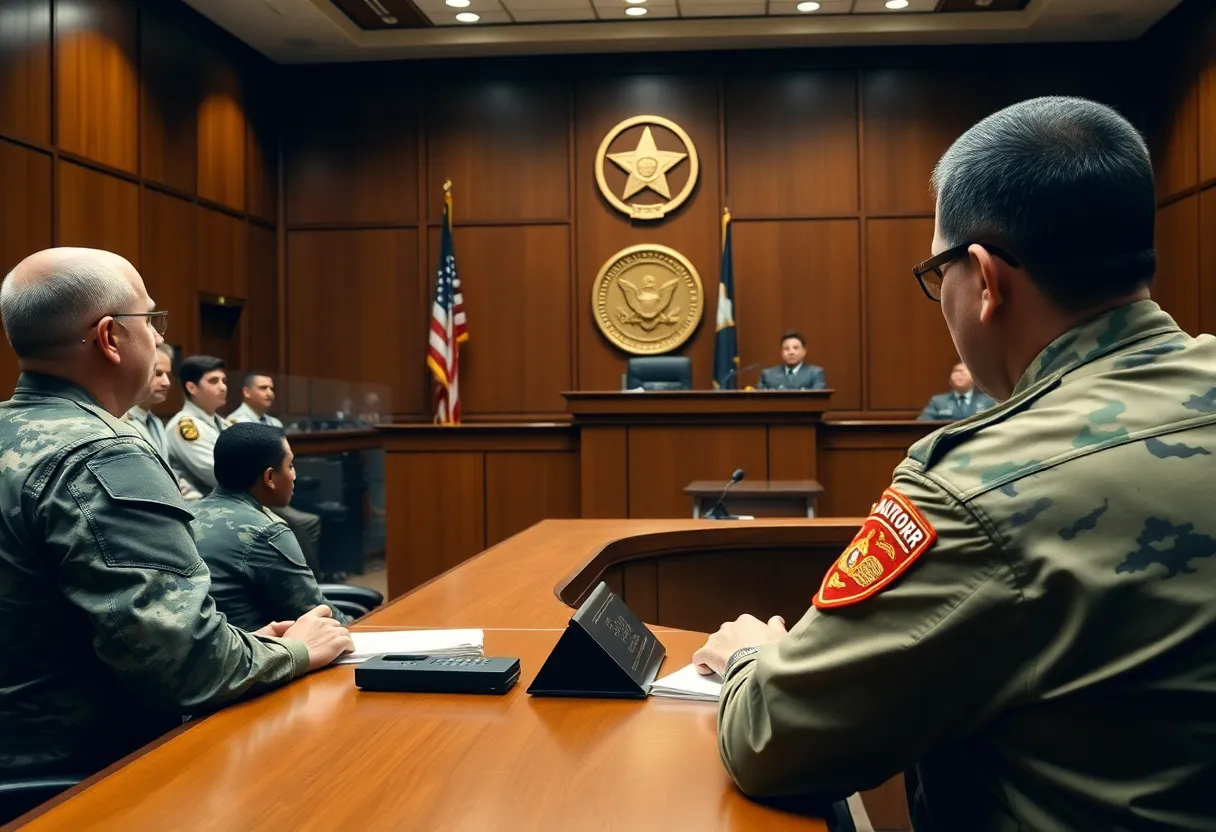
The Tennessee Court of Appeals will review a pivotal legal challenge regarding the deployment of the National Guard in Memphis. Following a court ruling that temporarily blocked the deployment due to concerns over constitutional limitations, the appeal highlights the intersection of public safety and military authority. Governor Bill Lee had initiated the deployment in response to rising crime, but faces opposition from local officials. The implications of this case extend beyond Memphis, potentially influencing how states utilize National Guard forces in urban areas.
Memphis, Tennessee
Tennessee Court of Appeals to Hear National Guard Case in Memphis
The legal battle over the deployment of the National Guard in Memphis promises to reshape both public safety efforts and military authority within the state.
The Tennessee Court of Appeals is set to review a significant legal challenge involving the state’s decision to deploy the National Guard in Memphis. Following a ruling by Davidson County Chancellor Patricia Head Moskal in November 2025, which temporarily blocked the deployment, the court will hear the state’s appeal on March 5, 2026. This case carries implications not just for Memphis but for how states address urban crime and invoke military resources.
Governor Bill Lee initiated the deployment as part of the Memphis Safe Task Force, a group formed in September 2025 under a directive from former President Donald Trump. This initiative aimed to tackle the rising crime rates plaguing the city. The deployment, however, faced legal challenges from Shelby County Mayor Lee Harris and other Democratic officials who argue that such action violates state law and the Tennessee Constitution.
Understanding the Legal Challenge
The legal challenge against the National Guard’s deployment was initiated by local Democratic officials. They contend that the Tennessee Constitution limits the Governor’s authority to call the National Guard into active service exclusively to cases of rebellion or invasion and that legislative approval is necessary for such action. Chancellor Moskal supported this interpretation, asserting that the Governor’s powers are not absolute and are governed by constitutional and statutory limitations.
The Implications of the Lower Court’s Ruling
Chancellor Moskal’s ruling has temporarily halted the National Guard’s involvement in patrolling Memphis, emphasizing the delicate balance between state authority and constitutional rights regarding military deployment within state borders. This ruling highlights crucial questions about governance and the limits on executive power, which may resonate not just within Tennessee but also in other states facing similar issues.
The State’s Response
In light of the lower court’s decision, the state has moved quickly to appeal. The Tennessee Court of Appeals has recognized the urgency of this case, scheduling oral arguments to take place in March 2026. The outcome of this appeal will be closely scrutinized, as it may set a precedent for how similar cases are handled in the future, potentially reshaping the legal framework for military involvement in civilian law enforcement efforts.
Community Reactions and Future Considerations
The potential implications of this case extend far beyond Memphis. As urban crime continues to be a pressing issue, the manner in which states utilize their National Guard forces could redefine the public’s perception of safety and security. Business owners in Memphis and local residents are likely to monitor developments closely, as the outcome could impact economic stability, neighborhood safety, and community trust in local governance.
The Broader Context of Military Deployment in Urban Areas
This situation in Memphis is reflective of a nationwide trend where the deployment of National Guard units in domestic situations is becoming more common. The Tennessee case raises important discussions about the role of military forces in civilian affairs and how states can innovate in addressing public safety concerns while adhering to constitutional limits.
Conclusion
The upcoming March hearing at the Court of Appeals sets the stage for an important discussion about governance, public safety, and the authority of the executive branch. As Memphis navigates these challenges, local entrepreneurs and community leaders continue to demonstrate resilience, advocating for solutions that prioritize safety without compromising constitutional rights. Community involvement and entrepreneurial innovation are essential in crafting Memphis’s economic future, and as citizens remain engaged, their voices will play a critical role in shaping the ongoing dialogue regarding law enforcement practices and public policy.
Frequently Asked Questions
What is the Tennessee Court of Appeals’ role in this case?
The Tennessee Court of Appeals is reviewing the state’s appeal of a lower court’s decision that temporarily blocked the deployment of the Tennessee National Guard in Memphis. Oral arguments are scheduled for March 5, 2026.
Why was the National Guard deployed to Memphis?
The deployment was initiated by Governor Bill Lee as part of the Memphis Safe Task Force, established in September 2025 under President Donald Trump’s directive to address rising crime rates in the city.
What was the legal challenge against the deployment?
The legal challenge was filed by Shelby County Mayor Lee Harris and other Democratic officials, arguing that the deployment violated Tennessee law and the state constitution. They contended that the Governor’s authority to deploy the National Guard is limited to cases of rebellion or invasion and requires legislative approval.
What was the outcome of the lower court’s ruling?
Davidson County Chancellor Patricia Head Moskal granted a temporary injunction, temporarily blocking the deployment of the National Guard in Memphis. The state has appealed this decision, and the Court of Appeals is scheduled to hear the case on March 5, 2026.
What are the potential implications of this case?
The outcome of this case could set a precedent for the deployment of state military resources in urban areas and may influence how similar situations are handled in other jurisdictions.
| Key Feature | Description |
|---|---|
| Legal Challenge | Filed by Shelby County Mayor Lee Harris and other Democratic officials, arguing that the deployment violated Tennessee law and the state constitution. |
| Lower Court Ruling | Davidson County Chancellor Patricia Head Moskal granted a temporary injunction, temporarily blocking the deployment of the National Guard in Memphis. |
| State’s Response | The state filed an appeal, and the Court of Appeals is scheduled to hear the case on March 5, 2026. |
| Potential Implications | The outcome could set a precedent for the deployment of state military resources in urban areas and influence similar situations in other jurisdictions. |
Deeper Dive: News & Info About This Topic
HERE Resources
TikTok Transfers Control of U.S. Operations to American Investors
Memphis Gynecologist’s Attorneys Seek Mistrial in Federal Case
Memphis Grizzlies Face Setbacks Amidst Recent Developments
Repeat Burglary at Memphis Residence Raises Security Concerns
Fatal Shooting in College Park Area of Memphis
Memphis Police Search for Missing 11-Year-Old Boy
DeSoto County Launches Anti-Crime Initiative Targeting Memphis Criminals
New Anti-Crime Initiative Targets Criminals Crossing into Mississippi
Memphis Names Charles Huff as New Head Football Coach
Memphis Hires New Head Coach Charles Huff for Football Team

Author: STAFF HERE MEMPHIS WRITER
The MEMPHIS STAFF WRITER represents the experienced team at HEREMemphis.com, your go-to source for actionable local news and information in Memphis, Shelby County, and beyond. Specializing in "news you can use," we cover essential topics like product reviews for personal and business needs, local business directories, politics, real estate trends, neighborhood insights, and state news affecting the area—with deep expertise drawn from years of dedicated reporting and strong community input, including local press releases and business updates. We deliver top reporting on high-value events such as Beale Street Music Festival, Elvis Week, and Memphis in May International Festival. Our coverage extends to key organizations like the Greater Memphis Chamber and the Memphis Convention & Visitors Bureau, plus leading businesses in logistics, healthcare, and music that power the local economy such as FedEx, St. Jude Children's Research Hospital, and AutoZone. As part of the broader HERE network, including HEREBristol.com, HEREChattanooga.com, HEREKnoxville.com, and HERENashville.com, we provide comprehensive, credible insights into Tennessee's dynamic landscape.