
Memphis, Tennessee, September 6, 2025
News Summary
The Mississippi River is experiencing significant declines in water levels, leading to restrictions on barge traffic and a steep drop in soybean prices. This downturn is attributed to a lack of rainfall in the upper basin, affecting transport to key export hubs like New Orleans. Amidst these challenges, farmers are considering storing their crops in hopes of better future pricing, but looming trade issues with China may worsen the situation. As the agricultural sector grapples with these disruptions, food inflation may become a larger concern.
Memphis, Tennessee – The Mississippi River’s water levels are experiencing a significant downturn, leading to a rapid decline in soybean basis, which denotes the price difference between local cash prices and futures contract prices. Hunter Biram, an extension economist at the University of Arkansas System Division of Agriculture, noted that the drop has been faster than any observed in previous years.
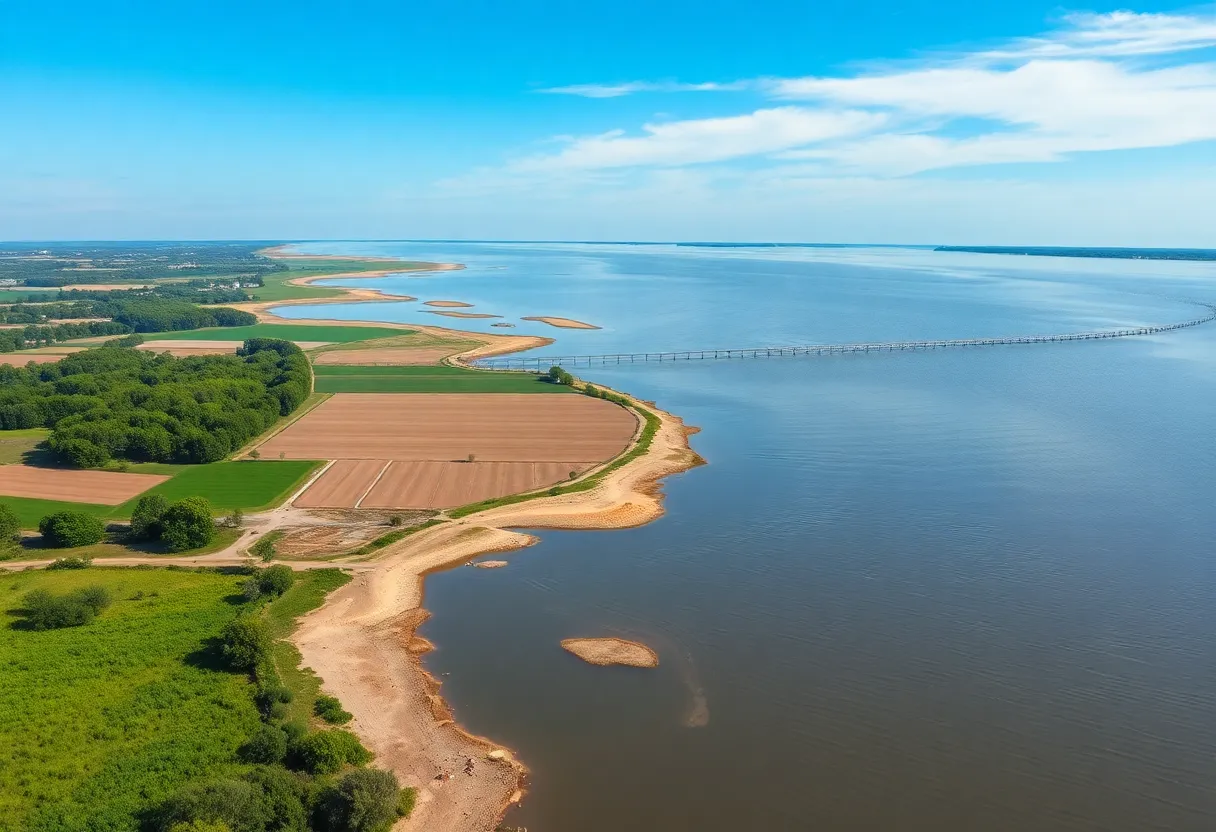
As of September 2, the Memphis gauge recorded a level of minus-0.27 feet, well above the critical low-water threshold of minus-8 feet. The steep decline is attributed to a lack of rainfall in the upper Mississippi Basin and nearby regions, marking this as one of the driest years on record for numerous counties across Missouri, Illinois, Kentucky, Indiana, and Ohio.
Due to the low water levels, the U.S. Coast Guard has enacted low-water restrictions on the lower Mississippi River, limiting the draft for northbound tow barges to 11 feet and southbound barges to 11.5 feet. These restrictions are causing a bottleneck in the transport of vital commodities like soybeans, rice, and corn. This disruption has notably affected the movement of goods toward New Orleans, a key hub for export.
Speculation is rife that grain elevator operators are bracing for increasing barge freight rates, which is contributing to the declining prices of soybeans. China has also ceased new purchases of U.S. soybeans, sharply contrasting with last year’s sales of 2.9 million tons by this time. Overall, the U.S. has managed to sell only 7.2 million tons of soybeans globally—down from nearly 10.2 million tons during the same period in the previous year. Mexico stands as the largest buyer, having imported 1.83 million tons thus far, followed by Pakistan, Taiwan, Egypt, and Japan.
Farmers are considering storing their soybeans in hopes of securing better prices in the future. However, if no trade deal with China materializes, this could lead to increased backlogs, which may, in turn, exacerbate price drops. According to the USDA, soybean stock levels are estimated at around 290 million bushels, a decrease from 330 million bushels in the previous year.
The export projections for soybeans have faced a downward adjustment of 9%, now set at 1.7 billion bushels. Fluctuating expectations about China’s purchasing intentions and a general decrease in U.S. production are major factors behind this revision. The broader agricultural sector is also facing challenges, as the 2025 rice crop is starting off slowly, with prices at five-year lows, resulting in growers choosing to store their crop for potential better market conditions. Current long-grain rice exports are approximately half of the previous year’s volume.
The transportation issues along the Mississippi River are adversely affecting not only soybean farmers but also other crop producers. Stakeholders within the agricultural community have expressed concerns surrounding the implications of transportation delays on the industry, with predictions suggesting food inflation may arise as a consequence of these prolonged shipment delays driven by low river levels and existing drought conditions.
Although future rainfall is anticipated, experts indicate that immediate improvement in river levels is unlikely until winter months, placing additional stress on agricultural exports and crop producers.
FAQ
What is the current status of the Mississippi River levels in Memphis?
The gauge levels of the Mississippi River in Memphis recorded minus-0.27 feet as of September 2, which is significantly lower than the critical low-water threshold of minus-8 feet.
How does the river level affect soybean prices and exports?
As the river levels decline, there are limitations on barge traffic, impacting the transportation of soybeans to export hubs like New Orleans, which results in a decrease in selling prices and overall export volumes.
What are the implications of decreased soybean exports for farmers?
Decreased exports lead to lower prices for soybeans, prompting farmers to consider storing their products. However, this could create backlogs and further pressure prices downward.
Key Features Summary
| Feature | Details |
|---|---|
| Current River Level | -0.27 feet as of September 2 |
| Impact on Soybean Basis | Rapid decline observed, faster than previous years |
| Exports Comparison | 7.2 million tons sold globally, down from 10.2 million tons last year |
| Storage Trend Among Farmers | Farmers considering storing soybeans for better pricing |
| Potential Future Issues | Worsening food inflation and agricultural bottlenecks |
Deeper Dive: News & Info About This Topic
HERE Resources
Memphis Celebrates Cultural Heritage with Art and Food Events
Low Mississippi River Levels Threaten Soybean Exports
Memphis Faces Moderate Drought Conditions
Additional Resources
- PB Commercial: Mississippi River’s Lower Levels at Memphis Mean
- Farm Progress: Study on Mississippi River’s 2022 Low Water Levels
- American Ag Network: Impact of Low Mississippi River Levels on Soybean Basis
- Iowa Farm Bureau: Low Mississippi River Levels Creating Unusual Basis Situation
- Local Memphis: Mississippi River Levels, Drought, and Economic Impact on Farmers
- Wikipedia: Mississippi River
- Google Search: Mississippi River low water levels impact
- Google Scholar: Mississippi River soybean export impact
- Encyclopedia Britannica: Mississippi River
- Google News: Mississippi River soybean prices


Author: STAFF HERE MEMPHIS WRITER
The MEMPHIS STAFF WRITER represents the experienced team at HEREMemphis.com, your go-to source for actionable local news and information in Memphis, Shelby County, and beyond. Specializing in "news you can use," we cover essential topics like product reviews for personal and business needs, local business directories, politics, real estate trends, neighborhood insights, and state news affecting the area—with deep expertise drawn from years of dedicated reporting and strong community input, including local press releases and business updates. We deliver top reporting on high-value events such as Beale Street Music Festival, Elvis Week, and Memphis in May International Festival. Our coverage extends to key organizations like the Greater Memphis Chamber and the Memphis Convention & Visitors Bureau, plus leading businesses in logistics, healthcare, and music that power the local economy such as FedEx, St. Jude Children's Research Hospital, and AutoZone. As part of the broader HERE network, including HEREBristol.com, HEREChattanooga.com, HEREKnoxville.com, and HERENashville.com, we provide comprehensive, credible insights into Tennessee's dynamic landscape.